However, can these AI generated models actually be used in professional commercial visualization? While the technology is impressive on a surface level, the reality under the hood reveals major technical roadblocks that make it entirely unviable for product marketing today.
Technical Issues with AI Generated Meshes and Topology
On a first glance, an AI generated 3D model might look acceptable. However, the internal structural layout of the model, known in the industry as topology, is fundamentally broken for professional production.In 3D modeling, topology refers to the wireframe flow of vertices, edges, and polygons that form the surface of a model. A professional 3D artist creates clean, mathematically logical loops of four sided polygons called quads. AI models, on the other hand, produce chaotic, dense, and irregular webs of triangles that closely resemble a raw 3D scan.
This happens because neural networks are primarily trained on photos of real objects and raw 3D scans, which are much easier to acquire at scale than meticulously hand crafted 3D data. This chaotic topology introduces several critical failures:
- Severe Performance Dropping: The dense, messy wireframes hog immense amounts of system memory, slowing down rendering times and making it incredibly difficult to manage large scenes with multiple objects.
- Impossible Animation: If you need your product to open, bend, or deform during an animation, an AI mesh will instantly tear, glitch, and distort because its edge flow does not follow natural mechanical lines.
While this can theoretically be fixed by a process called manual retopology, where an artist completely rebuilds the wireframe over the AI shell, the labor and workload required to do this takes just as long as hand creating the entire model cleanly from scratch.
Limitations with Novel Objects and Lost Details
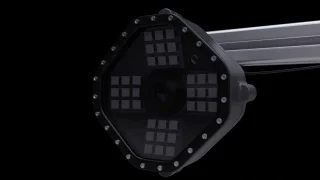
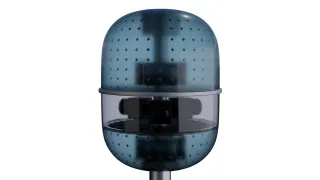
Another significant limitation involves how neural networks handle data scarcity. AI generators perform reasonably well on common, universally recognizable items like a coffee mug or a generic running shoe.However, if your product is a novel device, a highly specific industrial tool, or a custom electronic enclosure, the performance drops off a cliff. The training data for these AI models is naturally filled with popular objects, leaving the algorithm blind to unique or specialized designs. Furthermore, vital fine details like small mechanical grilles, delicate patterns, sharp texturing, or micro meshes are almost entirely lost during the conversion from flat image to 3D space.
Problems Modifying and Texturing AI Generated Models
In product visualization, clients frequently request adjustments, such as changing the curvature of a button, thickening an edge, or swapping a color scheme. With a hand crafted model or an optimized CAD translation, these edits take minutes.With an AI generated mesh, human modification is virtually impossible. Because the topology is a messy, unorganized web, traditional modeling tools cannot select logical rows of edges to move or scale them.
The texturing process is equally restricted. To apply a realistic PBR material or logo texture, a 3D model needs clean UV coordinates, which act like a flat blueprint mapping out how a 2D texture wraps around a 3D object. AI generators create completely random, fragmented UV maps. If you need to paint a logo or apply a specific finish to an AI mesh, you will find yourself completely locked out. Reversing this requires a full, grueling, and expensive manual overhaul.
How to Even Feed the AI
If your product is entirely new, unlaunched, or in a pre prototype phase, a massive logistical problem arises because you have no physical data to feed the AI generator.You do not have physical photographs yet. If you try to feed the AI screenshots of your flat CAD views, the neural network will inevitably output a heavily degraded, distorted version of that original CAD model, completely devoid of realistic materials.
You might try to pass your CAD views through an image generating AI to establish a realistic concept look, but you will instantly lose dimensional accuracy. For proprietary or novel objects, that loss of precision completely ruins the value of a technical visualization.
So for What to Use the AI Generated 3D Models?
If you are a company director, brand manager, or developer looking to secure high quality, photorealistic renders and animations for your flagship product, AI 3D generation is simply not worth the headache. The technology is not ready for hero products.Where AI can be beneficial is generating low priority background fillers, such as a random indoor plant or a generic book on a distant shelf. However, that is a tool for professional 3D artists looking to speed up scene dressing, not a viable shortcut for a business trying to replace traditional 3D pipelines.
Get Good 3D Models of Your Product
If you want to bypass the technical limitations of automated generation and achieve stunning, pixel perfect visuals of your proprietary hardware or consumer goods, let us build your assets the right way.Let us schedule a call at https://calendly.com/maciejak28/30min to deeply discuss your project needs and see how we can deliver the exact, high end look your brand deserves. You can also connect with us through our alternative channels by visiting our main contact page at https://csmx.eu/contact today.